As St Vincent and the Grenadines marks 47 years of Independence, this column traces the nation's proud sporting history—from the Ollivierre brothers and Frank O Mason to Eswort Coombs, Natasha Mayers, Shafiqua Maloney, and Gloria Ballantyne. It also confronts the uncomfortable truth: sport facilities have long been the whims of politicians rather than the product of systematic analysis, policy, and strategic planning. The time to wake up our sporting potential is now.

Belize's Prime Minister John Briceño showed rare Caribbean leadership by sharing ministerial budgets for sport. SVG, by contrast, has mismanaged the Sir Vincent Beache Stadium at Diamond—no cage for hammer throws, moss-covered track, and an expired World Athletics Certification Licence. This column examines the urgent lessons: physical activity and sport must be prioritised, and failure to plan is the surest guarantee of failure.

From the loss of the King George V Playing Field to the present day, successive Vincentian governments have offered sport little more than "lip service." This column traces the history of Arnos Vale, the Diamond stadium, the 2007 Caricom CNCD declaration and demands genuine consultation, transparency, and commitment. Sport is an everyday affair. Development is about people. We can do without the lip service.
In Part 2 of this series, the column examines whether sport can truly live up to its lofty billing. From the hollow "Sport Against Crime" programme in SVG to the global surge in legal gambling, the rise of Enhanced Games, and the failure to confront crime scientifically, this is a critical look at sport's challenges and its potential to save society from itself—if we grasp it.

Belize hosted its first National Sports Summit on 2–3 September 2026 under the theme "Building Belize Through Sport." With sport positioned as a critical pillar of national development, the summit brought together athletes, coaches, government ministers, and regional experts to address governance, physical literacy, athlete welfare, facilities, coaching, financing, and sports tourism. This column examines why Belize's approach offers a model worth emulating across the Caribbean.

The St Vincent and the Grenadines Netball Association (SVGNA) has launched a major initiative to rebuild the sport in rural communities, beginning in Fancy and moving to Georgetown. With 16 weeks of training for children and umpires, the SVGNA is building on its proud legacy—including historic wins and the rise of Moet Gaymes, the nation's first International Netball Umpire. This column examines the association's community-driven approach and its potential to reshape Vincentian sport.
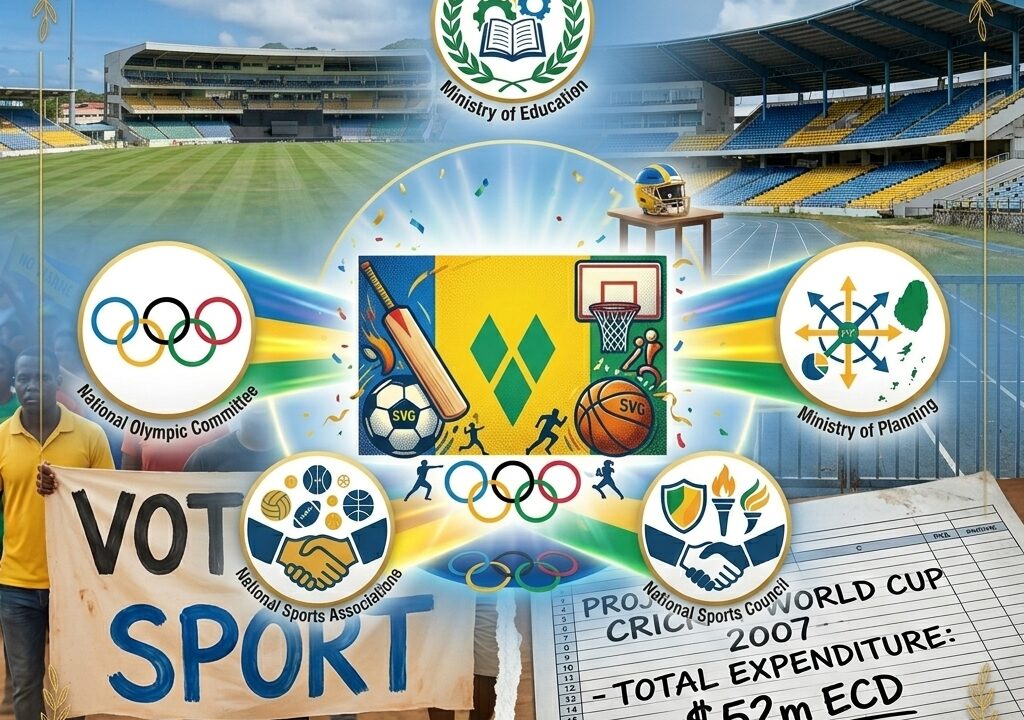
Sport in St Vincent and the Grenadines still lacks the priority it deserves. This column examines the ministerial status of sport, the roles of key agencies—the Ministry of Sport, Ministry of Education, National Sports Council, National Sports Associations, and the National Olympic Committee—and the urgent need for alignment. Development is about people, not just economics. Sport must be prioritised.

From Thomas Bach's "Change or be Changed" to Infantino's World Cup expansion plans, global sport is undergoing rapid transformation. This column examines the IOC's philanthropic model versus the USA's professional sports system, the emergence of private investors, and the Caribbean's struggle to keep pace. A critical analysis of where sport is heading—and what it means for the region.
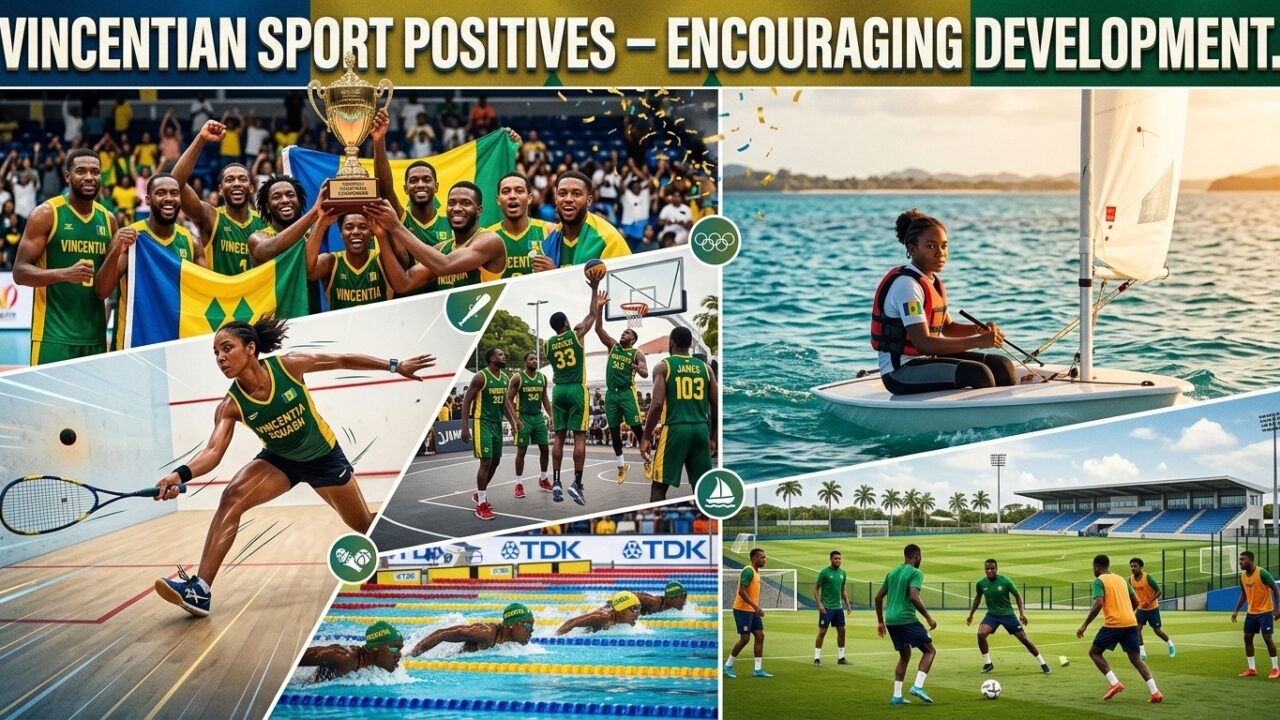
Vincentian sport is on the move. From volleyball's ECVA Championship victory to squash's Caribbean-level successes, basketball's 3x3 promise, sailing's new academy, and football's Brighton facility development—this column highlights the encouraging positives across SVG's sporting landscape. A new government, new opportunities, and a call for all Vincentians to contribute to national development through sport.
The funeral of Woodrow Williams at Victoria Park brought Vincentians together in a way never before witnessed—proving the power of sport to unite a nation. Yet St Vincent and the Grenadines still lacks a genuine national sports culture. This column examines why, from the absence of physical literacy in education to the failure to embrace sport as a way of life, and calls for a new approach rooted in belief, values, and national pride.

The Commonwealth Games and CAC Games clashed in 2026—leaving Caribbean athletes to choose. This column examines the scheduling conflict, Marileidy Paulino's hero status in the Dominican Republic, and the question of real loyalty. It also critiques SVG's lack of a national sport culture and the need for a new approach grounded in policy, monitoring, and national pride.
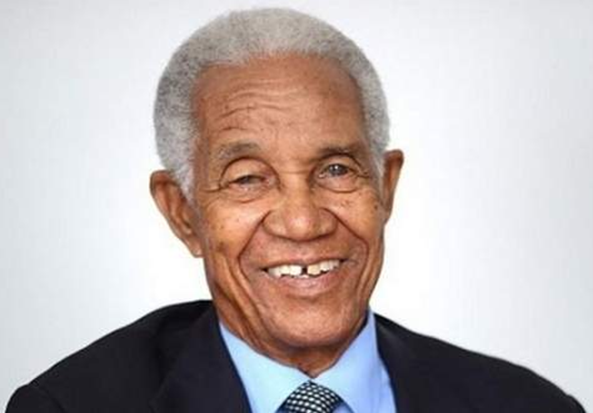
The Caribbean has long celebrated its sporting heroes but often fails to accord sport its rightful place in national culture. This column examines the recognition gap, from Garfield Sobers' treatment in Sydney to Kirani James' new accolade on the EC $5 bill. It also reflects on the OECS freedom of movement milestone and the region's rich sporting history as the CAC Games celebrate their centennial in the Dominican Republic.

SVG team on arrival in St. Kitts. OECS Championships 3rd place for SVG The 13...

FIFA corruption scandals. Olympic governance controversies. Sponsors who look the other way. This column examines the unvarnished truth: money, not morality, drives international sport. From the 1984 Los Angeles transformation to the modern betting boom, the author argues that the global sport industry reflects the same inequalities as the wider world and nothing has changed.

11 named for OECS Championships. 5 women and 6 men will represent St. Vincent &...