The Vincentian economy and sport – a conundrum
Following the general elections of 27 November 2026 a new government took hold of the reins of the nation’s government, much to the delight of the majority of the Vincentian electorate. The 14 – 1 victory reflected the mood of the electorate relative to a desire for meaningful change.
Over the past six months, the Vincentian public has been exposed to the state of the nation’s economy, much to their chagrin. However, it is not as though the electorate did not know that the economy was in a bad state. Rather, they had no idea of the extent to which the economy of St Vincent and the Grenadines was in a devastating state characterised by an incredible level of chronic indebtedness.
Of course, in the absence of a genuine sport culture, little or no attention was paid to the negative impact the economy had on sport, both in terms of the development of the disciplines and sport as a vehicle for development.
Close analysis of the economic strategies of the previous government reveals the extent to which they used sport as a political tool when it appeared to matter. Sport facilities became something of a political plaything to delight the sporting community and garner votes from the youths.
There is a seeming belief that Vincentian youths are too giddy-headed to take the time to understand the extent to which politicians have little respect for our sportspeople, in the long run.
Youth Manifesto
In the campaign of the political parties for the general elections of 2001, the ULP produced a youth manifesto, in addition to the regular manifesto. The intention was clear. The belief was that if the youths are convinced that the party was keen on helping the sportspeople, then they would go to the polls and vote in their favour.
The cover of the youth manifesto featured legendary Vincentian and Caribbean distance runner, Pamenos Ballantyne, against a national stadium.
For his part, Ballantyne bought into the narrative and made it to speaking on the party’s political platform and moved around with the party on the campaign trail, marketing the party to the nation’s sporting youths.
There are those who seem to think that the promise of a national stadium and the announcement of sport ambassadors may have garnered some support amongst the youth sport voters.
Cricket World Cup 2007
In 2007, the government accepted what many considered one of the ‘brown paper bag’ packages – hosting warm-up matches ahead of the Cricket World Cup. It should be noted that Bermuda had rejected the package that we later accepted; matches that had absolutely no bearing on the outcome of the World Cup. Our cost was a whopping $52m ECD.
Few could understand the decision of the government. Even today, 19 years later, it can possibly only be explained in terms of the perceived political currency of the ULP in government at the time.
During the hosting of the warmup matches here, the heavy-handed, draconian legislation that the government put in place, in tandem with the other CARICOM ‘host’ nations, led to poor attendances. This was the response of Vincentian lovers of sport and cricket, in particular, who protested the utter disrespect of the people of our nation, and the sour treatment of children who had their box juices taken away from them while accompanying their parents to the matches.
To this day few, if any, could lay claim to understanding the senseless expenditures incurred by the government for the Cricket World Cup 2007.
The Bermuda government made the correct decision not to take the ‘brown paper bag’ package.
Facilities
The facilities that allegedly cost the nation’s economy so much in 2007 were in poor shape long before 2020. More millions were spent on upgrading the deplorable Arnos Vale Sports Complex in preparation for the T20 World Cup in 2024.
While many welcomed the upgrade, especially the lights, few could understand the surrendering of the Party Stand for some inexplicable water pools that Vincentians would perhaps never use.
But for the 24-plus years of ULP government, we suddenly saw the intervention of the National Lotteries Authority (NLA) in the construction, management and maintenance of what can only be described as ‘special fields’ in what appeared to have been ‘select constituencies’. The intent, again, appeared more political than grounded in any genuine interest in sport and its potential to become one of the main pillars of the Vincentian economy.
The government failed to explain its own rationale for bypassing the National Sports Council (NSC) in respect of the NLA sport facilities, even though the official Sports Council Act stipulated that the responsibility for constructing and maintaining sports facilities around the country, with the exception of Victoria Park, rested with the NSC. Victoria Park fell under the Kingstown Town Board, as an entertainment venue that was a major source of income to the institution.
The relationship between the NLA and the NSC has not led to a cohesive approach to sport in the interest of sport development, to say nothing of its contribution to national development.
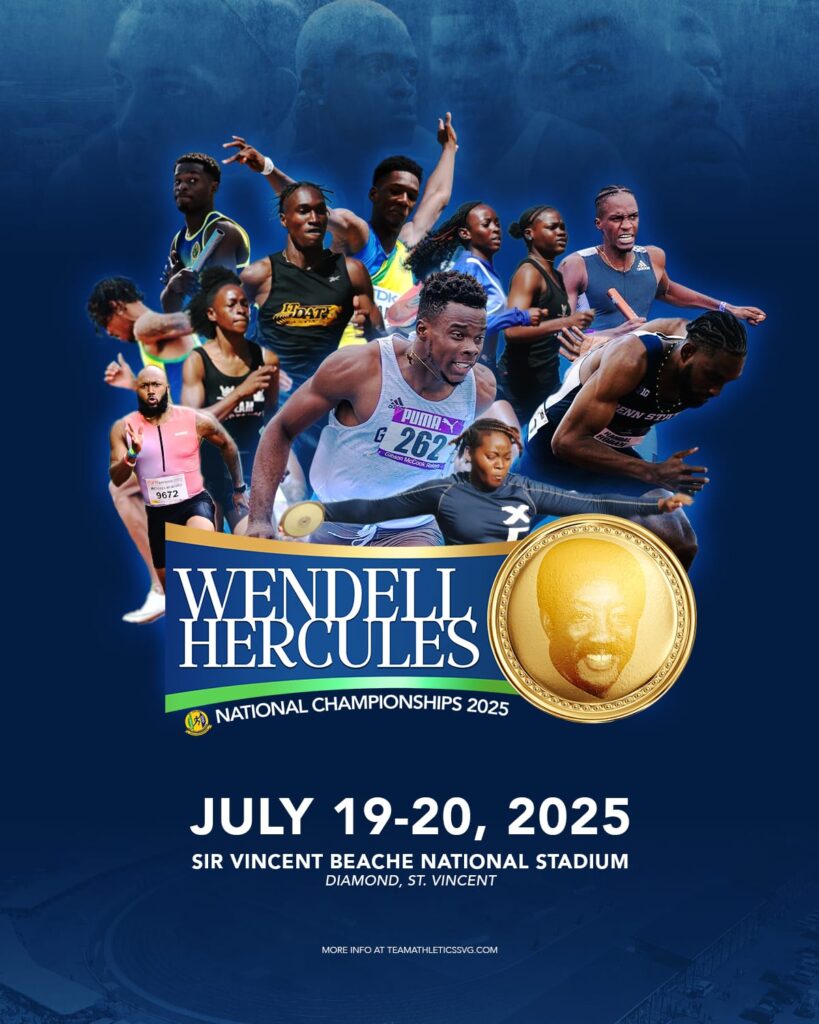
In 2020, a few days before the general elections, the government declared open the synthetic track and Diamond. Since its opening, the bleachers, located where the main pavilions and attendant facilities should have been constructed, have been covered. Two buildings have since been constructed at the facility, neither of which has as yet been commissioned. The licence for the synthetic surface expired in January 2026. Despite being reminded of the pending expiration of the licence in March of 2025, the licence was allowed to expire. The end result is the fact that none of the performances, however remarkable, achieved on the expired track, could be used as a facilitating qualification for World Athletics-sanctioned competitions.
Sport Financing
For the past 24 years, the government appeared to have been playing politics with sport financing. There was no plan in place for anyone serious about sport to follow.
Financial support for national sport associations appeared to have been based on what political value could be derived from it.
In 2015, the NLA borrowed $6.5m ECD from National Insurance Services, ostensibly to upgrade sporting facilities. No evidence was ever provided to national sports associations of what sport facilities were upgraded with the finances and at what cost. The real challenge for many Vincentians was the proximity of the loan to the general elections of that year.
The financial contributions of the government to sport events hosted by national sports associations appeared not to have any genuine, overall explanation attached to them. Even now, after the ULP government has been defeated at the polls, it appears difficult to conclude anything other than a complete lack of understanding of the Mandela concept that ‘sport has the power to change the world’. This may well have been replaced by a view that ‘sport has the capacity to facilitate the ego’.
The decision to host a separate activity to honour the ‘West Indies Cricket Legends’ of 1975 provides one of the best examples of the former government’s approach to sport. It is difficult to analyse the decision and expenditures incurred and not conclude that it was all ‘sick’ politics and an attempt at embarrassing the Vincentian who headed Cricket West Indies at the time, Kishore Shallow.
The Cricket Legends show fell flat and added no political value to the then government administration. It was a colossal waste of our financial resources. One is even uncertain that it generated any more votes for the then-ruling political party in the general elections of 2025.
Conclusion
When the FIFA President, Gianni Infantino, visited St Vincent and the Grenadines, this country’s government missed out on an excellent opportunity to collaborate with an international sport federation, FIFA, and its local member, the St Vincent and the Grenadines Football Federation (SVGFF).
The Vincentian economy could benefit from sport only if the approach undertaken by the government administration at any point begins with an understanding of the value of sport to the national economy and the broader issue of genuine national development. The former administration conducted governance without understanding or offering sport a place in national development.
‘Empty barrels’ were allowed to make the most noise about the government’s seemingly ‘strategic political use’ of sport and sportspeople. The strategies failed miserably because they had little to do with sport and its potential to be a major pillar of national development.
St Vincent and the Grenadines, as a nation, has an opportunity to construct a national development strategy that begins with an acknowledgement of critically important pillars. While we have heard of the pillars enunciated by the new administration, sport is yet to be accorded the prominence that it needs in our broader development strategy. Failure to readily redress this reality would leave future generations of Vincentian children, youths and young adults exposed to the vagaries of the negative consequences we are witnessing across the world today.
Future generations of Vincentian youth will hold us accountable, and history will not absolve us.