ACCORDING SPORT ITS RIGHTFUL PLACE
For decades, the people of the Caribbean have been avid followers of sport, but somehow have fallen well short of giving sport its rightful place in our respective national culture.
When sporting victory is attained, the nation stands together ever so proudly, in glowing support of the achievement, but soon thereafter, we seem to forget, all too quickly, the contribution of the athlete(s) to the country. The same happens at the regional and international levels.
We are often overly anxious to boast of our attainment of Independence from the colonial regimes of Europe that rigorously compete to capture, plunder our indigenous peoples and then repopulate us with slaves and indentured servants from distant lands, moulding into new social configurations that still, today, significantly impede our psychological process of becoming. It is the reason some sociologists insist that we have as yet no genuine sporting culture despite the achievements of our sporting icons.
It has often been said that our Caribbean sporting heroes benefit from greater recognition and respect in foreign lands than they are accorded in their respective islands. This is particularly true in sport.
Garfield Sobers
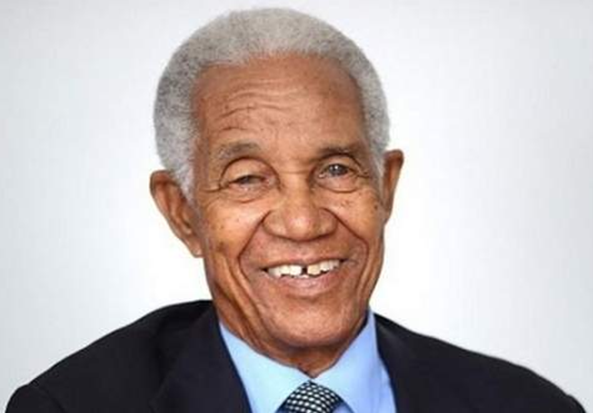
The incomparable Garfield Sobers
The world of sport is still discussing the remarkable on-field performances of the incomparable Barbadian and West Indian cricketer, Garfield Sobers, who passed away recently.
It is interesting the stories that emerge when some of our heroes die.
The story is told of the former cricketer, par excellence, having been taken along as a guest of a member of the International Olympic Committee, to the Summer Olympics held in Sydney, Australia, in 2000. With the sport of swimming featuring amongst the select sports that fell under the ambit of Prime Events Limitation (PEL), Garry was denied entry. The story is told that, perhaps somewhat embarrassed, he opted to leave the facility and return to his hotel and possibly, back to his native Barbados. Suddenly, as he was leaving, someone of immense importance from Australia recognised him and called him by name.
What followed was a brief discussion that eventually saw Garry being accorded the status and concomitant treatment that he deserved as one of the world’s most accomplished sports personalities.
This Columnist joins the international community in singing the cricketing praises of Garry. He was globally acknowledged for his sporting prowess and fittingly, accorded National Hero status in Barbados in the original list of that country’s establishment of National Heroes. For many years, he was the lone National Hero of Barbados who was accorded that status while still alive.
Kirani James of Grenada
Colonialism has left us in the Caribbean the despicable characterisation of countries by physical and population sizes. This unfortunate reality played a decisive role in the dismantling of the West Indies Federation (1958-1962). Some of the politicians of the day looked the other way when Theophilus Albert Marryshow, of Grenada, posed the challenging idea of establishing a Federation of the English-speaking Caribbean countries.
The people of the Caribbean can never forget the tense and embarrassing discussions that took place in Jamaica, where the small countries were deemed to possess few resources and in need of extensive assistance, so much so that they would seize every opportunity offered by a Federation to relocate to the larger, better-resourced islands, in the process, destroying the development prospects of the latter.
It is unfortunate that the Jamaican Referendum on the West Indies Federation ended the prospect of Caribbean unity for decades. Even now, that decision still causes tremendous pain, and the matter of size continues to raise its ugly head in one aspect of Caribbean life after another in a seemingly endless chain of disaffection.
Efforts continue to be made by many Caribbean individuals and groupings to effect a change in values and attitudes towards regionalism.
The University of the West Indies, itself often held aloft as a symbol of the immense potential of Caribbean regionalism, accorded Grenada’s first Olympic Champion an honorary doctorate. He is a national hero by public acclaim.
The latest accolade received by Kirani James is the announcement by the Eastern Caribbean Central Bank (ECCB) of his face being on the new EC $5 bill.
It is true that the ECCB has announced several other Caribbean personalities to replace the late Queen Elizabeth on the institution’s next issue of new notes, and that this is most commendable and a reflection of a move in the right direction, insofar as the broader Eastern Caribbean sub-regional integration process continues.
Since the announcement, much has been written and said about the personality of Kirani James and his remarkable distinction in carrying the accolade. Of note is the numerous commendations that highlight Kirani’s statesmanship, humility and impactful presence, wherever he is introduced.
There is little doubt that Kirani is a modest but excellent of what being a sports ambassador ought to be; an example to those who follow and enjoy sport and appreciate their service to country and people.
By its latest decision, the Organisation of Eastern Caribbean States (OECS) has once more taken the lead in the Caribbean. This follows its declaration in 2001 of agreement on the freedom of movement of the peoples of the subregion.
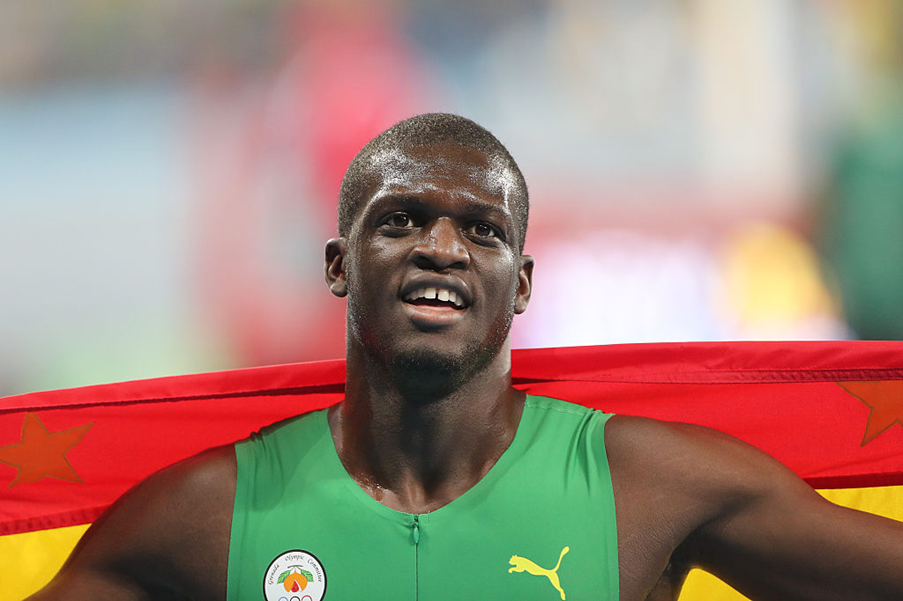
Dr Kirani James
Arrival in St Kitts and Nevis for the recently concluded Association of National Olympic Committees of the OECS (ANOCES) Track and Field Championships saw those who travelled on passports receive a stamp that read: OECS; Freedom of Movement; Indefinite Stay. Of course, this came into force after an agreement amongst member countries dating back to the latter part of 2001. Today, 25 years later, CARICOM member nations are still very far from such an agreement and this after 50-plus years in existence.
Similarly, CARICOM is yet to move to the kind of recognition of sport that we are witnessing in the OECS.
It should however, be noted that while we must shower commendations on what the OECS has been doing, albeit slowly, in respect of aspects of sport, the broader status of sport is still far from what ought to have been in place at this stage.
Thanks to the urgings of Joseph ‘Reds’ Perreira, the OECS Sports Desk was established with him as the sole occupant. All he literally had was a desk and a chair. He had to do most of everything by himself. The Desk has long since disappeared within the Secretariat, and little has been happening.
Sub-regional sporting organisations have been moving forward without any involvement of the Secretariat. There is no official recognition of the several sub-regional sports institutions and their contribution to the development of the area.
A Brighter Future For Sport
Our Caribbean constitutes a rich sporting environment. We are now in the Dominican Republic, celebrating the centennial of the founding of the Central American and Caribbean (CAC) Games.
The Caribbean athletes understand that the CAC Games are the oldest multisport Games in the world, after the Olympic Games. That gives our region a very special place in global sporting history, a feat of which we should all be proud.
The future of the CAC Games, like that of the Caribbean Games, is not secure. The government of the Dominican Republic has shown its love for sport by agreeing to host the Games. The Caribbean Games do not yet have the commitment that the Dominican Republic has shown in hosting the CAC Games of 2026.
We long, as Caribbean people, for CARICOM, the peoples, well beyond the politicians, to come to an understanding of and appreciation for what sport has done for many of our countries, because the achievements are a reflection of the immense potential of our peoples. Our athletes are the embodiment of the aspirations of our people and carry that with them in every event.
Mandela’s mantra, ‘Sport can change the world’, can translate into making the Caribbean a genuinely better place…our home.
Let’s kick the doors open wide to the dawn of a new day for sport in Caribbean life!