A BELIZEAN EXAMPLE WORTH EMULATING
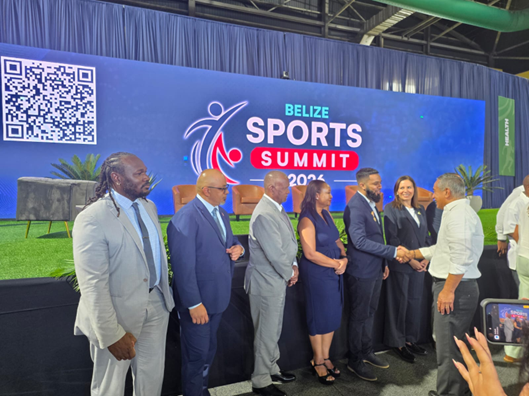
A couple of weeks ago, I had the good fortune of being invited to be one of several experienced sport administrators from across the Caribbean to join the government and sport stakeholders from Belize in what was billed as the first Belize National Sports Summit, 2 – 3 September 2026.
The Summit was jointly organised by the Ministry of Tourism, Youth, Sports and Diaspora Relations and the National Sports Council of Belize, under the broad theme, ‘Building Belize Through Sport’.
The governmental authorities, in place for approximately 18 months, is of the view that sport make a positive impact on the development of Belize and thought appropriate to engage individuals and organisations to assist with facilitating both sport development and sport for development in the early phase of their management of the nation.
Work has already begun on a comprehensive review of Belize’s national sports policy and laying of the foundation for a strategic plan and accompanying action plan.
According to the organisers of the Summit, ‘Sport is one of Belize’s strongest platforms for youth opportunity, healthier communities, national pride, social connection and economic development. Yet its full value depends on a national system that links schools, clubs, federations, municipalities, communities, athlete services, facilities, financing and high-performance pathways.’ Given the foregoing understanding of the authorities and the Belizean people, the Summit was ‘designed as a working forum to move Belize toward shared standards, clear priorities and measurable action’.
It is important that one of the new government’s intention is to locate sport as a critical pillar of national development. In this regard, participants to the Summit included athletes and para-athletes, coaches and officials, national sporting federations and clubs students, PE teachers and school leaders, municipalities, youth and community organizations, health, nutrition and mental-health professionals, tourism stakeholders, private-sector partners, sponsors, development agencies, diaspora representatives, media, policymakers and regional and international sports leaders.’ It is understandable therefore, that the organisers of the Summit sought out individuals and organisations with the requisite knowledge, expertise and experience in the various aspects of sport to be part of the national event
Major areas of the Summit
Governance & accountability
The Summit sought to place governance and accountability at the top of its priority list for any approach being taken to set sport in Belize on a sound footing. The desire was to establish very clear standards for national sport federations that included transparent leadership, accountability, integrity, high ethical and moral standards, clearly enunciated four-year plans matched by an annual reporting system. These organisations must also be engaged in strong coordination with the National Sports Council at all times, leaving government always fully aware of the extent to which they are meeting their commitment to the broader national development process.
A strong, consistent monitoring, evaluation and learning (MEL) system, must be fully operational at all times, allowing for appropriate amendments to be made when deemed necessary.
Physical literacy, community, school and youth sport.
The government wanted greater attention to be paid to the early beginnings of Belizean engagement in physical activity – physical literacy. This is to be given equal priority as numeracy and literacy in early childhood development, starting in the home.
Communities must emphasise physical activity as a continuation of what begins at home and supported by the schools, clubs and national sport organisations and the National Olympic Committee (NOC).
Sport for all must be emphasised by government at all of its institutions, linking this to enhanced physical and mental wellbeing, discipline and productivity.
The people of Belize must all be aware of the pathway being established across the country, introducing, encouraging and maintaining healthy lifestyles for all.
Athlete welfare & safeguarding
The welfare of all Belizeans must be integral to the sport development process and sport for development programmes. Nutritional standards must be of an acceptable level for all who engage in sport. This included due attention being paid to the school-feeding programme. Parents must be aware of these requirements and when they prove unable to meeting them, be afforded appropriate assistance to do so.
All of Belize must come to an understanding of the vale of physical activity and sport to one’s health. The Ministry of Health is as important to the sport fraternity as it is to the other aspects of life in society.
Engagement in physical activity and good eating habits are amongst the best ways to combat non-communicable diseases in the society.
The scourge of obesity, especially amongst children in society must receive our collective, combative response.
Mental health must be explained to the population and each citizen must be monitored. Society must be brought to an understanding that mental health does not necessarily refer to mental illness. Parents, teachers, coaches and sport leaders must all encourage a better education of society about mental health and its role in healthy living.
All persons participating in sport are so be guaranteed the requisite protection from harm and danger at all times and in all circumstances.
Every effort must be made to promote gender equity and keep discrimination of any sort, at bay
Emphasis must therefore be placed on sport in Belize being inclusive at all times.
Insistence on fair sport in part of the safe sport mandate. Performance-enhancing drugs and methods must be eliminated.
Facilities & access
The government of Belize, while acknowledging the limitations imposed by the small, vulnerable nature of the country’s economy, has nonetheless committed to working to find the extra funding to meet the growing demands of a successful national sport programme. This commitment was given by John Antonio Briceño, the Prime Minister of Belize, who officially opened the Summit and delivered an impressive presentation.
Belizeans can expect a gradual increase in the construction of world-standard sport facilities for the nation’s athletes. Facilities will be strategically located in communities to bolster participation, starting at the grassroots level. High performance facilities in different sports will also receive the government’s attention more than has been the case in the past.
Coaching & other fields
Efforts will be made, through a partnership between national sport federations, their respective international federations, the NOC and the government to consistently educate, train, certify and expand the number of coaches, at different levels of qualification, to conduct year-round, quality coaching for children through to elite, high-performance athletes.
Students must be education about the expanding career pathways emerging in the international sport arena. They must be encouraged to seek out advanced education and training options for advancing themselves and increasing the pool of home-based certified sport personnel.
Financing & partnerships
Belize government officials and several of the panellists addressed the matter of the financing of sport, especially in national with small economies. However, the nation’s Prome Minister insisted that he is convinced that the while there are major challenged in procuring the necessary resources, he is willing to take the plunge and make some critical shifts in the available resources, given the immense benefits the majority of Belizeans will enjoy as a result.
Panellists called for greater ‘public investment, sponsorship, private-sector participation, development cooperation and transparent resourcing for sustainable programmes’ in Belize.
Sports tourism & national opportunity
The Summit paid much attention to the burgeoning field of sport tourism around the world. This discussion included the experiences of Belize in terms of the several regional sporting competitions that the country has hosted in the past.
Once more the government agreed to pay full attention to analysing the impact that sport tourism can have on the nation.
Plans are to focus on sport events in the widest sense and not be limited to competitions.
Sport Tourism cuts across several critically important ministries of government and insists that the planned activities are considered investment opportunities by, for and through sport.
A government’s full commitment to Sport
The Summit was agreeably a first step for the new government of Belize. Most importantly, financing of the event served to convince e many that there is more than enough goodwill on the part of the government to move forward.
Among the attendees at the Summit were government ministers and other officials from around the six regions of Belize. They were full participants, not merely there to make up numbers nor give the impression of ‘good politicking’.
The stakeholders came from far and wide for two full days of consultation, sharing and learning. At the end, there was much satisfaction that the time had finally come for the government to place sport at a very. High level on the national development list of priorities.
Of course, while many from outside Belize look to see what happens there over the next several months, those inside Belize who organised and facilitated the Summit, have already begun their share of the work.
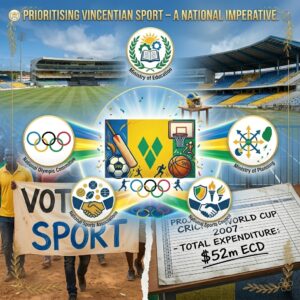
Here at home, Vincentians must examine ourselves, determine where we are in respect of comprehensively addressing the state of sport. We must also determine the precise lessons we must take from the Belizean experience.