Continuing Contradictions in Global Sport
In an earlier Column dated Friday 6 February 2026, I insisted that the time has come for sport to speak up on issues affecting mankind, noting that the athletes, coaches and administrators, have as much right to speak up as those who use their positions of wealth and power to dictate to the rest of us.
Over the past few weeks, we have witnessed the emergence of several new and important examples of the power of those who control sport as opposed to the power of sport itself.
Nelson Mandela, after 27 years of imprisonment on Robbin Island, during which time he supported the international boycott of South Africa in many international sport competitions, was elected the first black president in his post-apartheid nation in 1994. One year later, South Africa not only hosted the Rugby World Cup but emerged champions defeating New Zealand’s All Blacks in the final.
Mandela, while delivering a speech at the Inaugural Laureus World Sports Awards 2000, declared,
“Sport has the power to change the world. It has the power to inspire. It has the power to unite people in a way that little else does. It speaks to youth in a language they understand. Sport can create hope where once there was only despair. It is more powerful than governments in breaking down racial barriers. It laughs in the face of all types of discrimination.”
Since that famous speech, sport leaders around the world as well as politicians, have quoted it on numerous occasions. Unfortunately, the practice of sport, globally, continues to. Be a major contradiction in respect of any display of understanding the significance of Mandela’s enduring statement.
In many parts of the world, even in countries where sport is practised almost like a religion, it appears as though Mandela’s words are used but never really heeded. This at every level of sport.
Indeed, it appears that sport, like other aspects of life everywhere, is controlled by the upper classes, essentially allowing for it to be operated as an ever-evolving plantation on which the participants are dictated to much as was the case during the era of slavery in the Americas.
It remains an unfortunate reality that through the centuries, mankind has somehow allowed itself to be used and abused for economic gain while infusing sport with the lofty positive values usually proffered by religious institutions.
Sport is today still one of the primary vehicles of human exploitation. We are perhaps all too often confused with the infusion of awards, the push for adoration of winners and the passionate musings of those responsible for the competitions in respect of desired outcomes.
Importantly, as with slavery, the plantation owners broker no resistance or challenges of any sort that they fear they may not be able to contain in the long run. They have become increasingly proficient in the application of the ‘divide and rule’ approach to leadership through manipulation of those who resist the temptation to stand up and speak out.
Athletes’ Voices at Winter Olympics 2026
Haiti
The Haitian Olympic Committee and indeed all of sport Haiti received the strongest rebuff on arrival at the Winter Olympics in the Italian cities of Milan and Cortina, a few weeks ago. The Haitian delegation had produced their track suits bearing the image of national hero, Toussaint L’Ouverture, thinking that it was an importantly impressive representation of the lofty ideals of the world’s first black nation to forcefully win its Independence from a major colonial power.
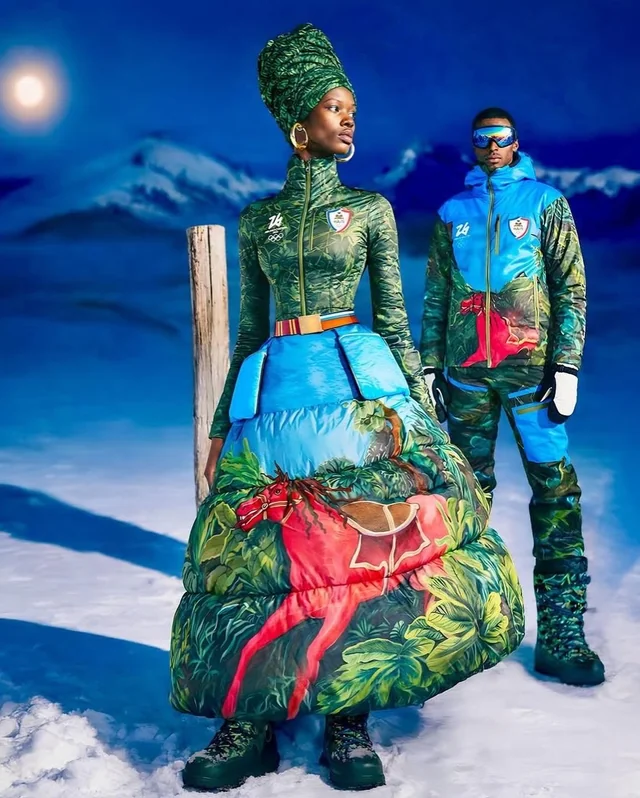
Jonathan Giles, writing in the online edition of the Magazine, Ebony, dated 6 February 2026, noted,Haiti’s 2026 Winter Olympic uniforms, designed by Italian-Haitian designer, Stelle Jean, initially featured the image of Toussaint L’Ouverture, one of the Haitian Revolution’s defining figures. The International Olympic Committee looked at the design and did what it so often does when confronted with specificity: it reached for “neutrality,” called the portrait “political symbolism,” and asked for it to be removed’.
The designer, steeped in the culture of her homeland, described her work of art, From the highest peaks of the Caribbean to the heart of the Dolomites. Haiti makes its debut at @milanocortina2026 2026 with Richi Viano and Stevenson Savart. Two athletes. One nation that refuses to disappear.
These uniforms are not an exercise in style. They are an act of responsibility. Every detail is intentional. Every centimeter of fabric carries the duty to tell a story — and the will to endure.
Made in Italy. Crafted by former ski champion Pietro Vitalini. The only hand-painted uniforms at the Games, inspired by the visionary art of Edouard Duval-Carrié.
What you see is not decoration. It is visibility as a form of survival.
The decision of the International Olympic Committee (IOC) – 107 individual members and 39 Honorary Members – brokered no consultation with the 206 National Olympic Committees (NOC) they consider a different category of members of the International Olympic Movement. The latter, the institutions responsible for providing the athletes that make the Games what they are and whom we proclaim are central to the competition, are neither directly involved in the decision-making processes in their own right, nor in the determination of the rules and regulations that govern the Olympic Games.
As far as the IOC is concerned, the NOCs are to continue to serve up athletes, the literal producers of the organisation’s revenue base, access some funding from the revenue generated, and maintain strict adherence to the Olympic Charter, or be removed, summarily, from their roster.
Occasionally, after decades, in some instances, the IOC apologies for its own contribution to the breaches of what are its fundamental principles.
Ukraine
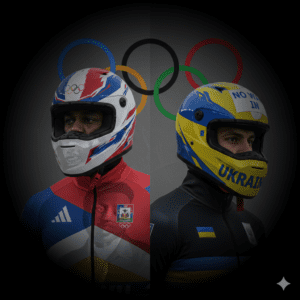
‘The President of Ukraine, Volodymyr Zelenskyy, on Friday bestowed the Order of Freedom upon the Olympic skeleton racer (Vladyslav Heraskevych) who became one of the most talked-about athletes of the Games following his disqualification at Milano Cortina.
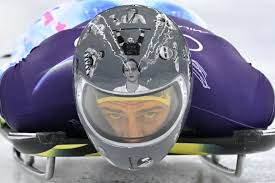
The gesture took place on the margins of the Munich Security Conference, a forum typically defined by high-stakes geopolitical deliberations. This time, however, the controversy surrounding the Ukrainian athlete’s helmet added a layer of symbolism to the broader debate about the boundaries of sporting regulation. According to Zelenskyy, the honour was intended to recognise the athlete’s moral stance rather than his competitive result. “Medals matter for Ukraine and for you,” he said during the ceremony, “but what truly matters is who you are.”’
The foregoing quotation comes from an article written by Raul Daffunchio Picazo dated 13 February 2026. It tells an extremely powerful story of courage on the part of the two men involved.
Zelenskyy was perhaps the least political leader to have become an important representation of courage and defiance against one of the world’s most powerful nation, Russia, at what may end up being immeasurable cost.
For his part, Vladyslav Heraskevych, had himself etched in the annals of global sporting histiry, for his decision to higfhlight in a rather unique manner, the remarkable injustice of what the world has allowed to become a most horrific reality in Ukraine.
The IOC’s decision to disqualify Vladyslav Heraskevych from competing with the helmet of some of Ukraine’s ‘sacrificial lambs’, leaves the institution something of an ignoble sporting pariah for what some may see as an expansion of the mockery of the Olympic Truce.
An IOC document stated, ‘The Olympic Truce Resolution was adopted today (19 November 2025) by the 80th Session of the United Nations General Assembly (UNGA) in New York. The resolution calls for the observance of the Olympic Truce for the Milano Cortina 2026 Olympic and Paralympic Games. International Olympic Committee (IOC) President Kirsty Coventry and Milano Cortina 2026 Organising Committee President and IOC Member Giovanni Malagò welcomed the adoption, by consensus, in their addresses during the General Assembly.
This tradition of the Olympic Truce, in existence for many years, seems to ring hollow for many athletes and sporting organisations aroiund the world. While IOC President Kirsty Coventry declared the following at the United Nations last year, ‘Around the world, conflict and division continue to cause untold suffering. In such a world, sport – and the Olympic Games in particular – can offer a rare space where people meet not as adversaries, but as fellow human beings. When athletes come together, they do not see nationality, religion or background. They see one another as fellow athletes. They show us what humanity can be at its very best. This is the spirit of the Olympic Truce: a call to set aside what divides us – and rather to focus on what unites us,” the death toll continues to rise in several conflict hotspots around the world and about which the IOC has conveniently steered clear.
Lords of the Rings
It appears, all too often, that the members of the IOC are unaware that their behaviour as a collective leaves much of the sporting world concerned about the organisation’s commitment to the very fundamental principles of Olympism and good governance that it preaches to the NOCs.
The history of the IOC and its leadership of the International Olympoic Movement is at best one of money, power and politics. Small wonder that the legendary Andrew Jennings and Vyv Simson wrote the book, The lords of the rings : power, money and drugs in the modern Olympics. This book was published in 1992, edited by Simon and Schuster. The title says it all. Its publication led to the start of global discussions on the inner workings of the IOC, a process that continues almost every day.
Over the past few weeks, there has been much focus on the financial status of the IOC. The likes of Atos, Bridgestone, Panasonic, Toyota and Intel have left The Olympic Programme (TOP)., while Brewer AB InBev and China’s TCL have signed on as new partners for the current Olympic cycle and beyond. The leadership is worried, especially since President Coventry has big shoes to fill, even as her predecessor, Thomas Bach, lurks in the corridors, perhaps monitoring his legacy as she sets out on creating her own.
The bottom line of the IOC is, for the most part, essentially another international organisation concerned about making money. The difference is that the IOC operates under the ambit of the age-old philanthropic edict. For many, after years of study, the latter may well mask the gruesome reality.